
- 24/7
Customer Service
- IBR Certified
Manufacturer
- Qualified
Expert Professional
Thermic Fluid Heater vs Steam Boiler
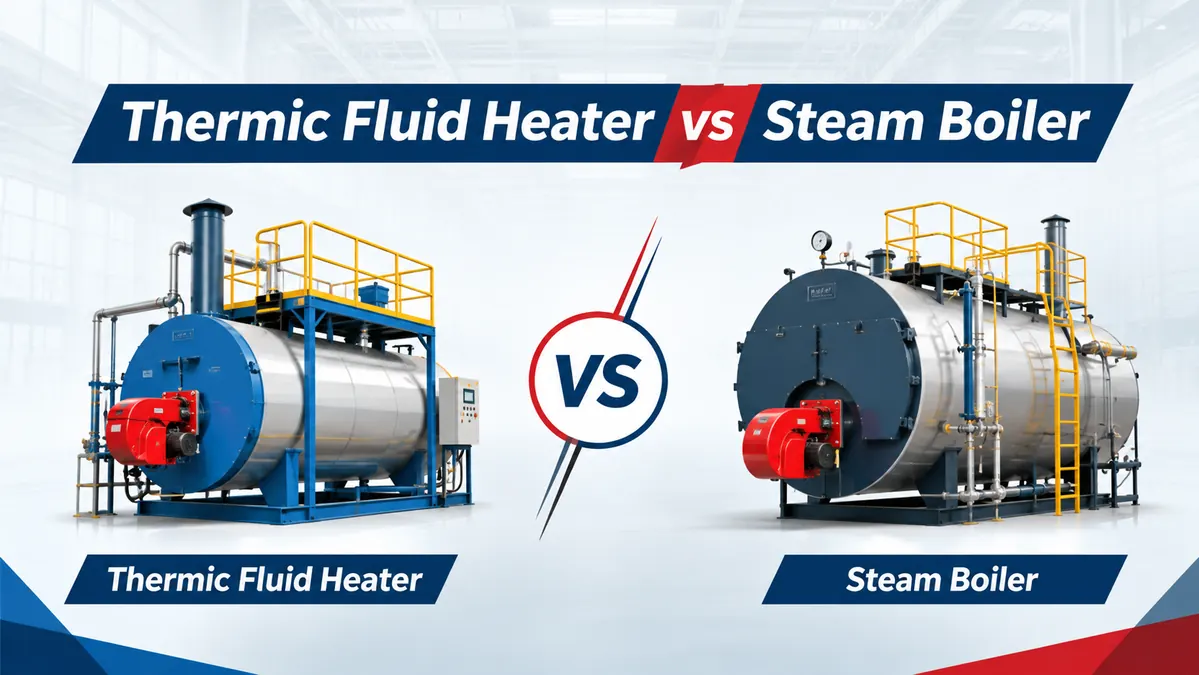
Thermic Fluid Heater vs Steam Boiler
Choosing between a thermic fluid heater and a steam boiler is one of the most important decisions a plant owner makes. The wrong choice can mean higher fuel bills, constant maintenance trouble, or a system that never quite reaches the temperature your process needs. The right one pays back every single day.
At Himani Boiler, we have been manufacturing industrial heating systems for Indian industry since 1991. This guide explains how each system works, where each one performs best, and how to decide for your plant.
How a Steam Boiler Works
Steam boiler is a type of equipment that uses burning of fuel to heat up the water so that it turns into steam. This steam goes to your process equipment via pipelines, where it releases heat upon cooling down and turning back into water. Due to its high level of energy content, it provides fast and uniform heat supply.
Steam boilers come in different designs. Smoke tube boilers suit low to medium steam demand, while water tube boilers are built for higher capacities and pressures.
How a Thermic Fluid Heater Works
A thermic fluid heater heats a special thermal oil in a closed loop. A pump circulates the hot oil to your process equipment, and the cooled oil returns to the heater to be heated again. The oil does not boil at working temperatures, so the system runs at low pressure even when the oil is at 250–300°C.
Key Differences at a Glance
|
Factor |
Steam Boiler |
Thermic Fluid Heater |
|
Operating temperature |
Rises with pressure; higher temperatures need much higher pressure |
Up to around 300°C |
|
Operating pressure |
Increases with temperature |
Low, close to atmospheric |
|
Water treatment |
Required (softening, blowdown) |
Not required |
|
Heat delivery |
Direct or indirect |
Indirect only |
|
Main upkeep |
Water quality, scaling, blowdown |
Oil quality, periodic oil testing |
|
Common uses |
Food, dairy, beverage, pharma, paper |
Plywood, chemicals, rubber, laminates, edible oil |
When a Steam Boiler Is the Better Choice
- Direct steam is needed. Cooking, blanching, sterilising, and humidification all rely on steam touching the product or space.
- Temperatures are moderate. If your process runs below about 200°C, steam does the job efficiently at manageable pressure.
- Fast, uniform heating matters. Steam condenses evenly on heating surfaces, which is why dairies, food plants, and pharma units rely on it.
- You need one source for many points. Steam is easy to distribute across a large plant through a header.
When a Thermic Fluid Heater Is the Better Choice
- Your process needs high temperatures. Reaching 250–300°C with steam would mean very high pressure and heavier equipment. A thermic fluid heater gets there at low pressure.
- You want precise, steady temperature. Hot oil gives stable heating, which suits hot presses, dryers, and reactors.
- You want to avoid water treatment. A closed oil loop has no scaling, no blowdown, and no water treatment plant to run.
- Safety and simplicity are priorities. Low operating pressure means fewer pressure-related risks.
Cost and Operating Considerations
Fuel efficiency. Both systems can be highly efficient when properly sized and well maintained. Heat loss from poor insulation, wrong sizing, or fouled heating surfaces matters more than the technology choice itself.
Operating cost. Steam boilers need ongoing water treatment and blowdown management. Thermic fluid heaters need regular oil quality checks, because degraded oil reduces heat transfer and can foul the coil.
Fuel Adaptability. Both can be built to run on biomass, coal, oil, or gas. Choose the design around the fuel you can source reliably and affordably.
Installation. Check the regulations that apply to your system and operating pressure. A reputable manufacturer will guide you through this.
Five Questions to Ask Before You Decide
- What is the maximum temperature my process actually needs?
- Does my process need direct steam contact?
- How many heating points do I need to serve, and how far apart are they?
- Can I manage water treatment, or would I rather avoid it?
- Which fuel is cheapest and most reliable at my location?
If your answers point to high temperature and indirect heating, lean towards a thermic fluid heater. If they point to direct steam, moderate temperature, and many users, lean towards a steam boiler.
Get the Right System for Your Plant
There is no universally better option. The best choice depends on your temperature, process, fuel, and plant layout. Our engineers can review your requirements and recommend a design built for your capacity and fuel.
With decades of experience serving plywood, food processing, dairy, textile, chemical, and packaging industries, Himani Boiler can help you choose the right system and support it long after installation.